Jordan Storey is the top performer for Preston North End in interceptions per 90 minutes for the 2026/27 Championship season. Statistics show the defender leads the squad with a rate of 1.5, having made three total interceptions.
This defensive data arrives as Preston sit 20th in the Championship table with zero points from two games. They have scored two goals and conceded five, leaving them with a negative three goal difference. Their next match is away to third-placed Charlton on August 29, a fixture detailed on our fixtures page.
Jordan Storey's 1.5 interceptions per 90 minutes puts him clear at the top of the squad's rankings. His three total interceptions are the highest among the players listed in the data set. Andrew Hughes follows closely behind with a rate of 1.1 per 90, having made two interceptions. Harry Clarke completes the top three with a rate of 1.0 from his single interception.
The data also includes contributions from Liam Lindsay, who recorded a rate of 0.6 from one interception, and midfielder Alfie Devine, who posted a rate of 0.5 from his one interception. This breakdown provides a clear picture of where Preston's defensive actions are originating in the early part of the campaign.
The statistical data for Preston North End covers multiple competitions and seasons. It includes Championship seasons stretching back to 2016/17, FA Cup campaigns from 2016/17 to 2025/26, and EFL Cup participation from 2021/22 to the current 2026/27 season. Historical data from the EFL Trophy from 2011/12 to 2014/15 is also present. This longitudinal view allows for comparison, though the current focus is squarely on the 2026/27 Championship metrics.
The interception statistics highlight the defensive workload being shouldered by Preston's centre-backs. Storey, Hughes, and Clarke are all featured prominently, indicating a defensive unit that is actively engaged in breaking up opposition attacks. This metric is one component of a broader defensive picture that the club will be analysing closely.
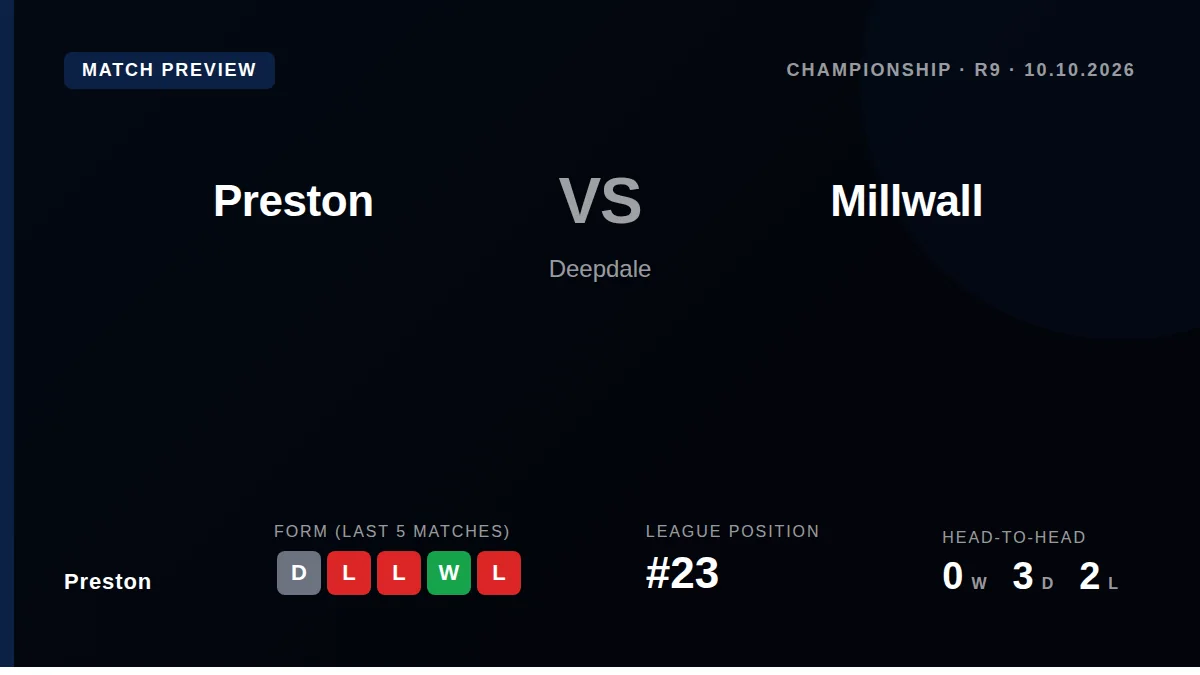
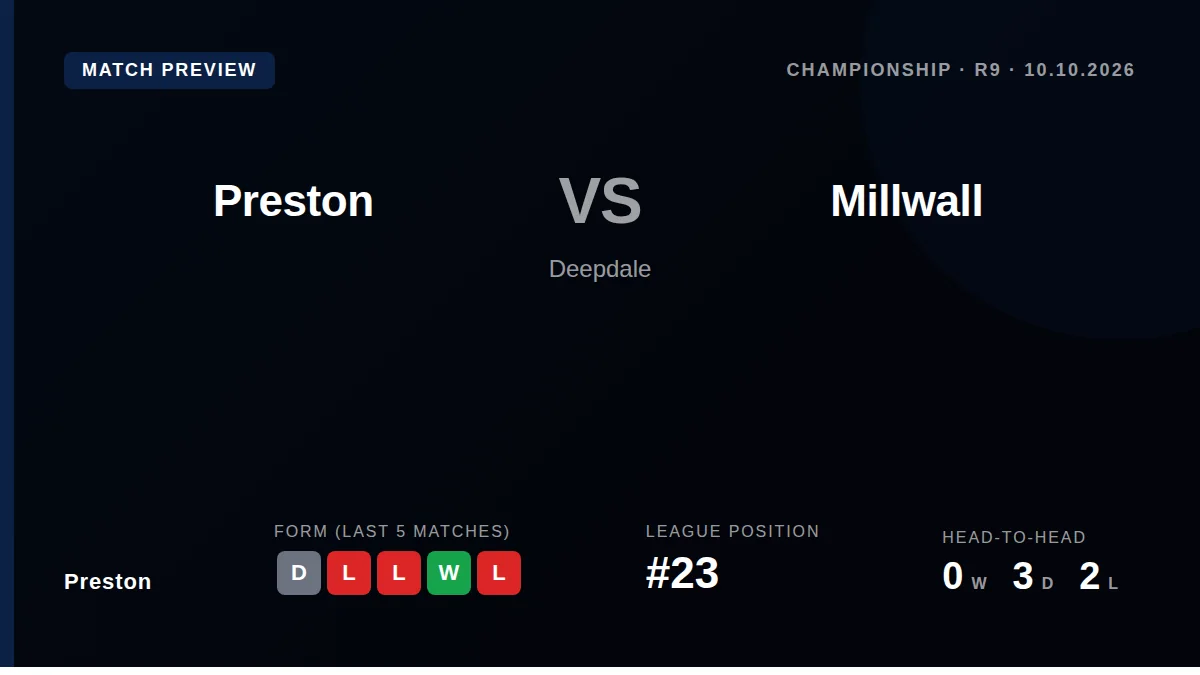
Preston currently find themselves six points behind early league leaders Millwall. Improving defensive solidity will be a priority as they look to climb the standings. The team's recent form shows two consecutive losses, making a strong defensive performance against Charlton particularly important.
Supporters interested in deeper analysis can explore the full range of player and team data on our dedicated stats section. The data that provided this interception information also includes filter options to view statistics by player position, including All, Midfielder, and Center-back. This allows for more targeted analysis of how different units within the squad are performing. For a complete view of the playing personnel, the club's squad page offers detailed profiles.
Preston's coaching staff will likely use this kind of performance data to assess individual and team defensive shape. As the season progresses, tracking whether interception rates increase or decrease will offer insights into the team's tactical adjustments and defensive cohesion. The immediate challenge is to translate these individual defensive actions into a collective result that stops the losing streak.